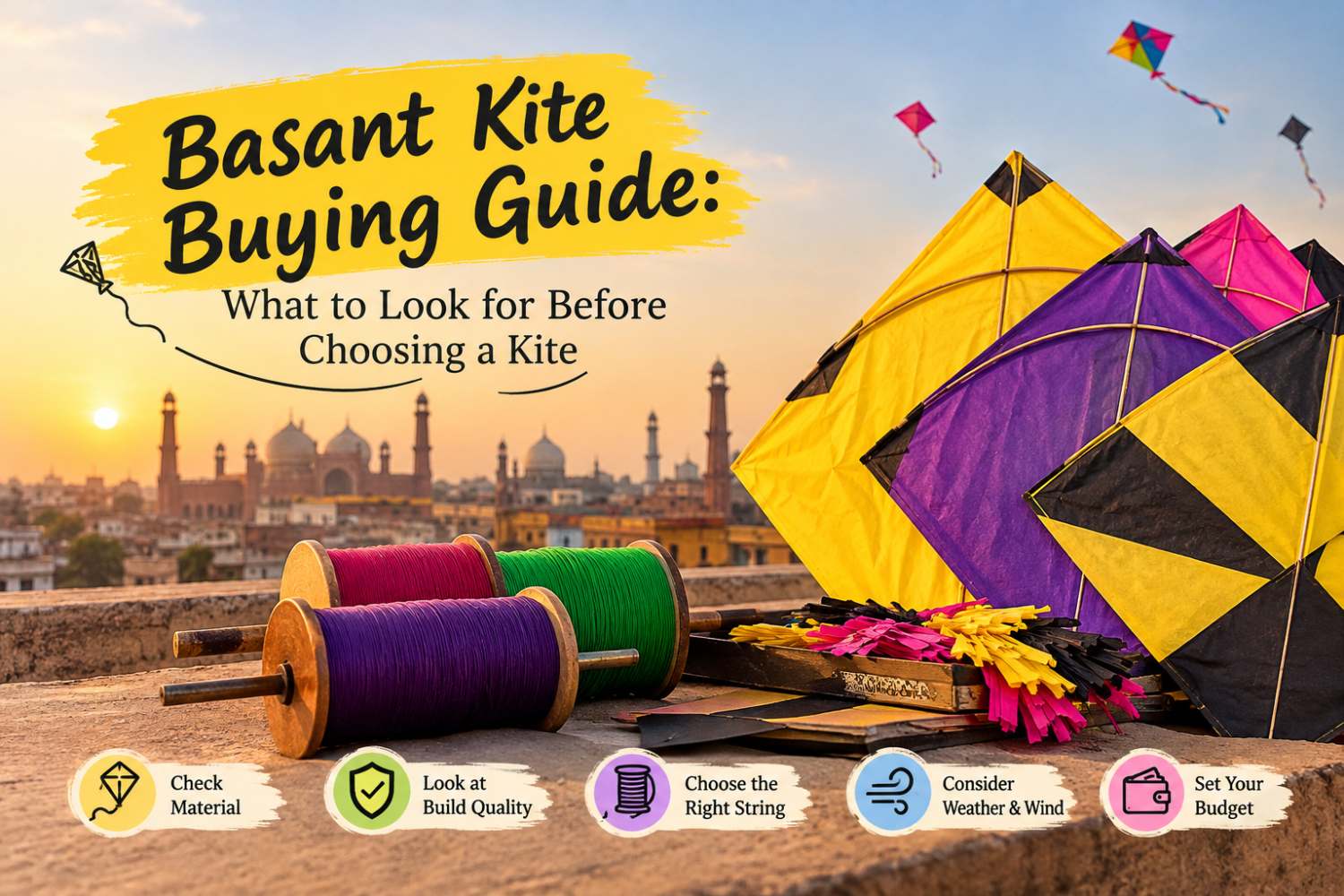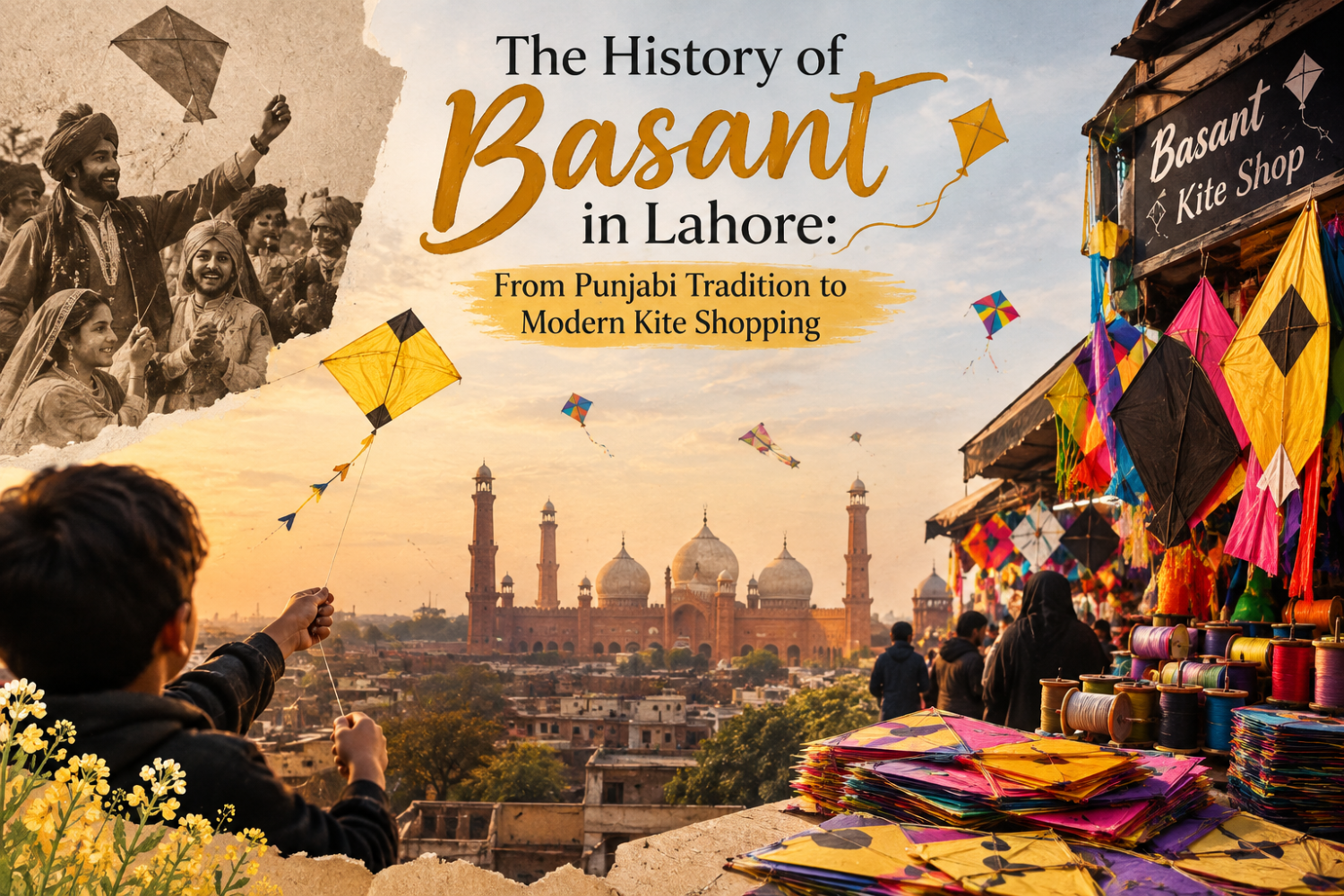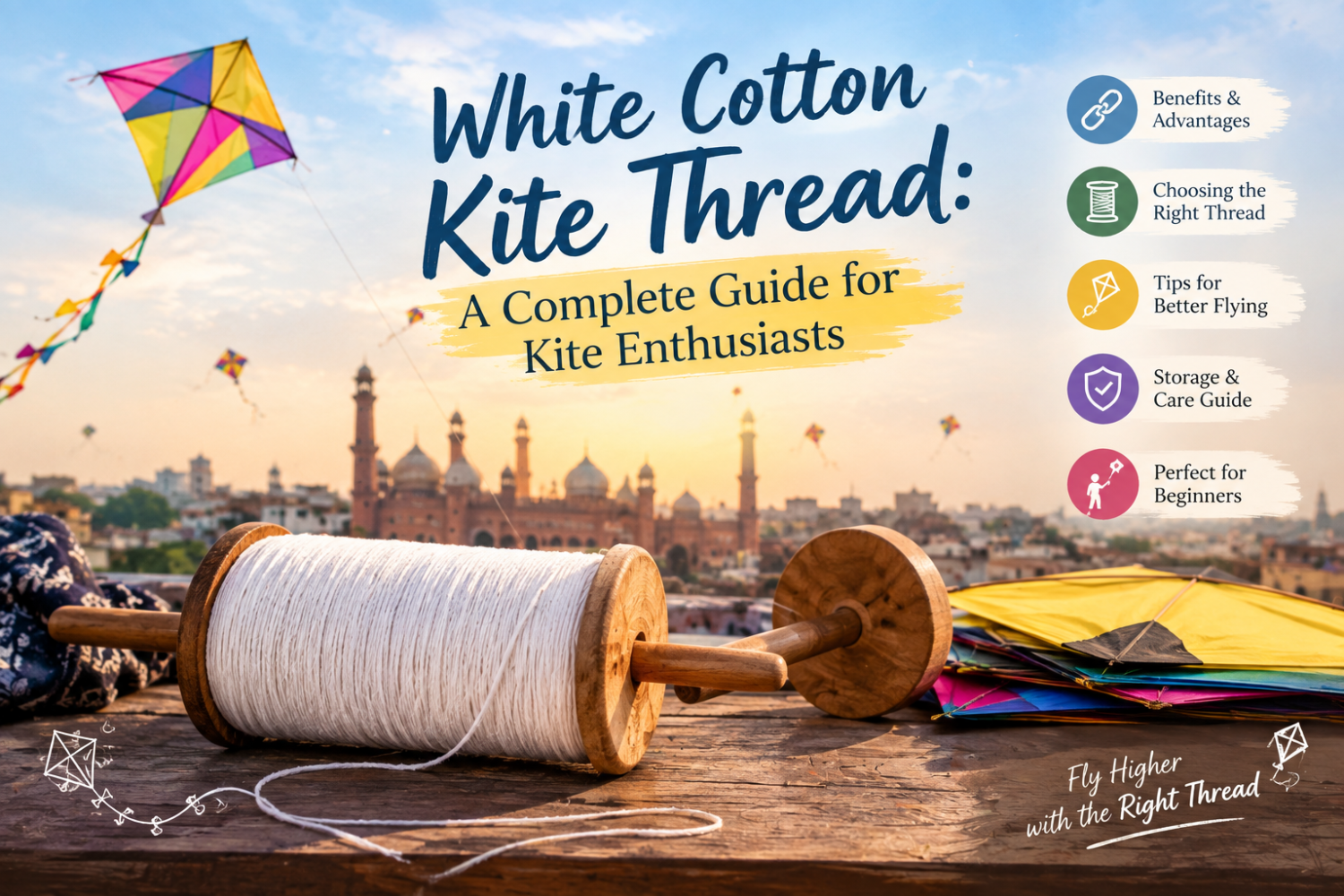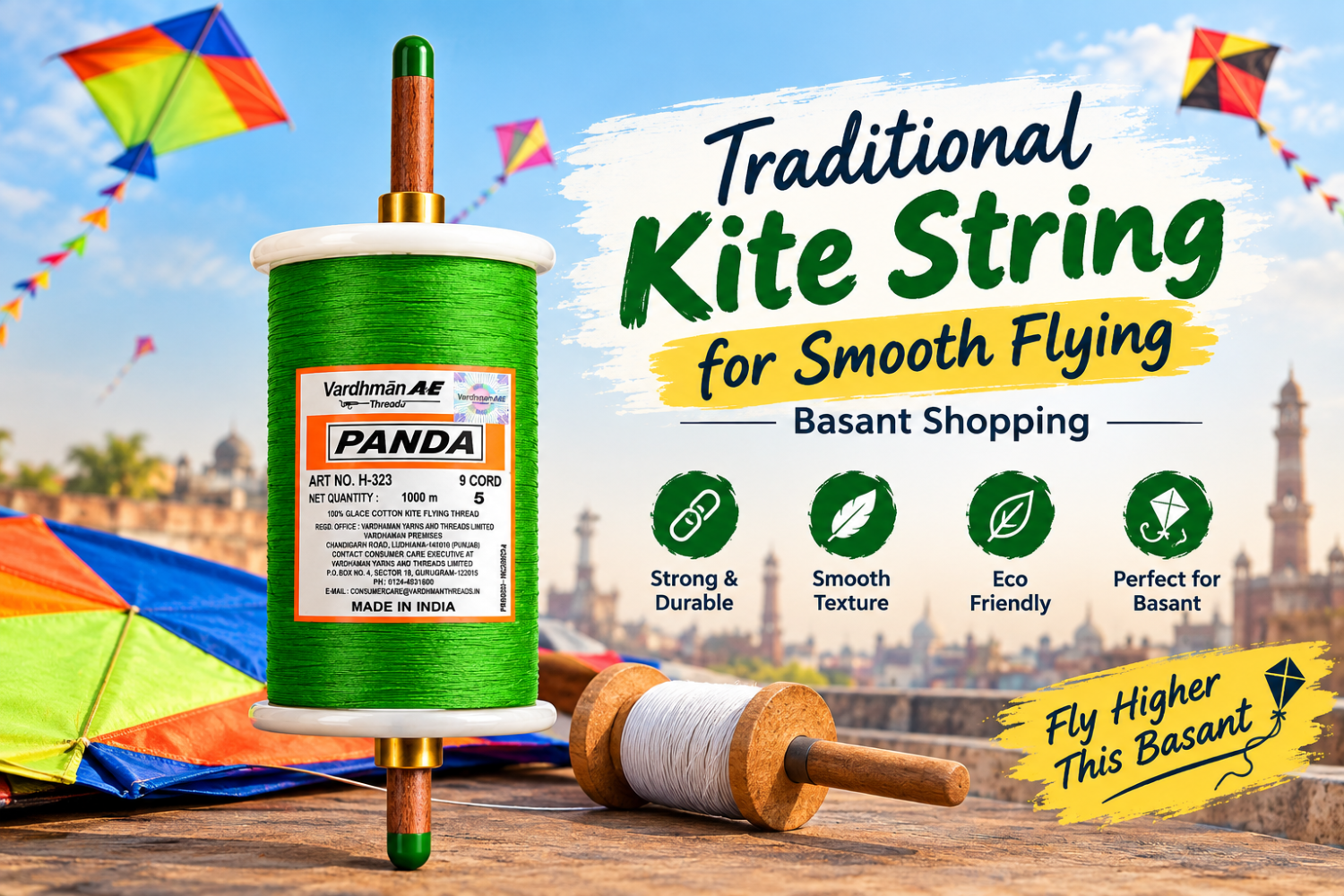

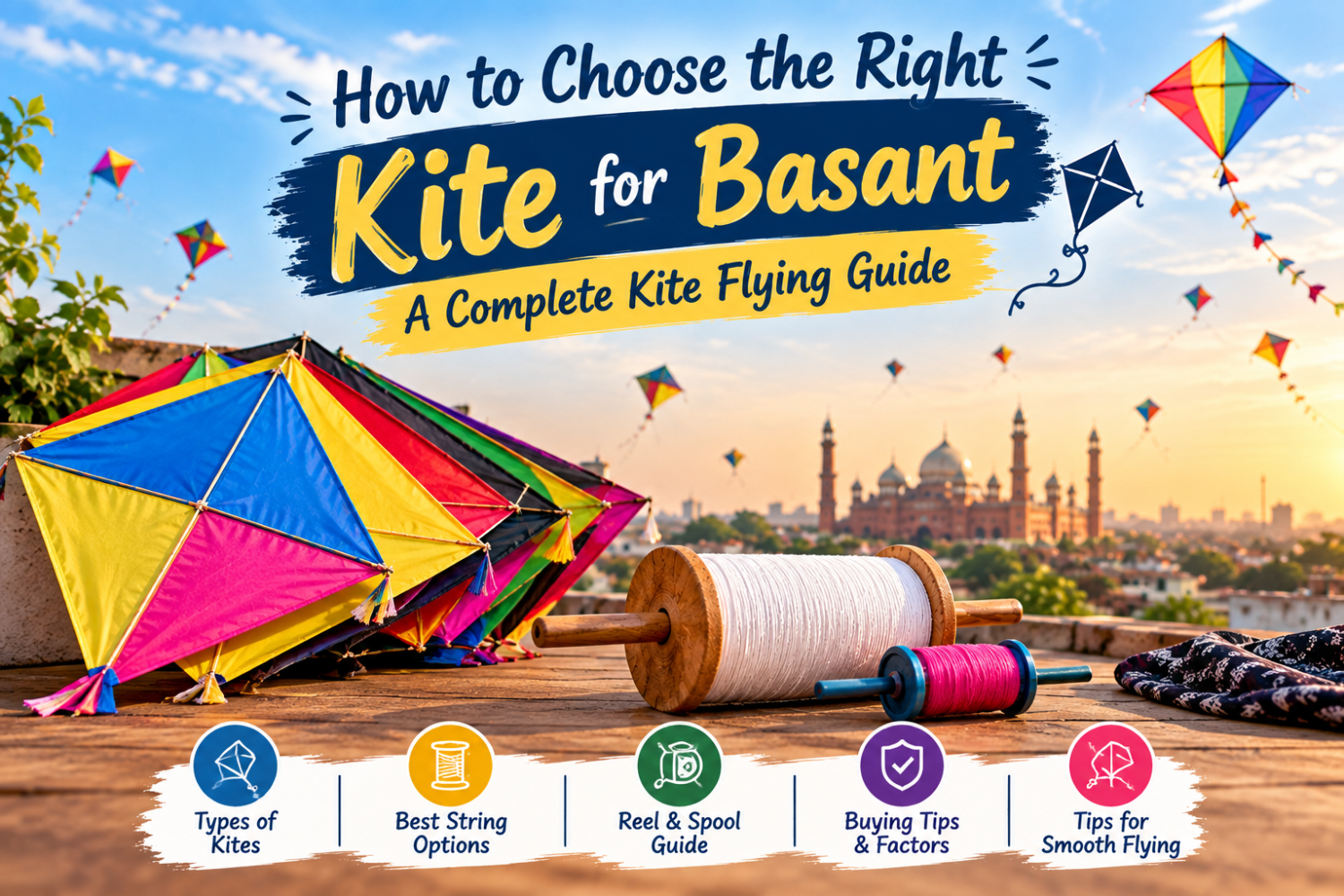
Choosing the right kite can make Basant more enjoyable, especially when there are many shapes, sizes, and styles available. A kite may look attractive, but its design, material, size, and intended use all affect how suitable it is for a particular setup.
For beginners, a simple and easy-to-handle kite is usually the best place to start. More experienced flyers may prefer a different shape, larger size, or more active flying style. Understanding the difference between a Box Kite, Stunt Kite, Paper Kite, Diamond Kite, Flying Kite, and Coloring Kite can help buyers make a more informed choice.
This guide explains the main kite types, what to check before buying, and how to select a suitable kite for recreational Basant flying.
Start with the Purpose of the Kite
Before choosing a kite, think about how it will be used. Some people want a simple kite for casual outdoor flying. Others are interested in decorative designs, traditional paper styles, or kites that offer a more active flying experience.
A product should match the user’s skill level and the type of flying they plan to enjoy.
The important thing is not to choose a kite only because it looks impressive. Its size, weight, construction, and intended use should also make sense.
Understanding the Flying Kite Category
The term Flying Kite is a broad category that can include many different styles. A flying kite is designed primarily for outdoor recreational use and may be made from paper, fabric, or other lightweight materials.
When browsing an online kite store, customers should look beyond the general category name. Product pages should explain the kite’s dimensions, materials, frame construction, color, and recommended use.
Clear details help customers understand whether they are looking at a traditional lightweight design, a decorative kite, or a more structured style.
Traditional Paper Kite
A Paper Kite is one of the most recognizable styles associated with traditional kite culture. These kites are usually lightweight and commonly use paper combined with a light frame. Their simple construction gives them the classic appearance many people associate with Basant.
Paper kites are often available in bright colors, patterns, and different traditional shapes. Useful details include paper quality, frame material, size, shape, and overall finish.
A paper kite should also be packed carefully because the lightweight material can be more delicate than some modern alternatives. Good product photography helps buyers clearly see the design and construction.
Diamond Kite
A Diamond Kite is one of the most recognizable kite styles. Its classic diamond-shaped structure gives it a simple and familiar appearance, making it suitable for recreational flying.
Diamond kites are available in different sizes, colors, and materials. Their traditional shape also makes them a good option for decorative designs and family-friendly kite activities.
When buying a Diamond Kite online, customers should check the dimensions, frame material, surface material, color, and construction. Clear photos from different angles can also help buyers understand the design before ordering.
Box Kite
A Box Kite has a noticeably different structure from a traditional flat paper kite. Instead of a simple flat shape, it uses a three-dimensional frame, giving it a distinctive appearance.
For buyers who enjoy exploring different kite styles, a box-shaped design can offer something unique. When shopping online, customers should check the overall dimensions, frame material, assembly details, and packaging.
Photos from more than one angle are especially useful because a single front-facing image may not fully show the structure of a Box Kite.
Stunt Kite
A Stunt Kite is designed for a more active and controlled recreational flying experience than a basic traditional kite. Its shape and construction may differ from common paper designs, and it is often selected by people looking for something more dynamic.
Users should choose a product that matches their experience level and follow the manufacturer’s guidance. Online listings should state the kite size, material, recommended user level, and what comes in the package.
A Stunt Kite should not be confused with a traditional paper kite simply because both are designed to fly.
Coloring Kite
A Coloring Kite adds a creative element to the traditional kite experience. Instead of buying only a finished design, users can enjoy decorating or coloring the kite before using or displaying it.
This type can work well as a creative activity, especially for families or children when used with age-appropriate materials and adult supervision.
A Coloring Kite listing should clearly explain what is included in the pack. If coloring materials are provided, the description should mention them. Showing both the plain design and a finished example can also help customers understand the concept.
Choosing the Right Size
Kite size is one of the most important factors to consider. A very large kite may look impressive but may not be the most practical option for every user. A very small kite may suit a different type of experience.
Beginners often find moderate-sized kites easier to understand and manage. Online stores should list dimensions clearly instead of using only labels such as small, medium, or large.
Measurements make it easier for customers to compare a Paper Kite with a Box Kite, Diamond Kite, or another Flying Kite without guessing.
Check the Material and Construction
Material affects the overall feel, durability, and appearance of a kite. Traditional kites may use lightweight paper and thin frames, while other styles may use different materials.
Buyers should check the product description for frame type, surface material, finishing, and packaging. Clear specifications are more useful than decorative marketing language and help customers understand what they are actually buying.
Design and Color
Basant is strongly associated with bright colors, so appearance is naturally an important part of choosing a kite. Some buyers may prefer a traditional single-color design, while others may like bold prints, mixed colors, or decorative patterns.
Product images should represent the actual colors as closely as possible. If a design is available in multiple colors, each variation should ideally be shown separately.
Consider the User’s Experience Level
Not every kite is equally suitable for every user. A simple Paper Kite or basic Flying Kite may be easier for a beginner, while a more complex Box Kite or Stunt Kite may appeal to someone with more experience.
A Diamond Kite can also be a familiar option for recreational use because of its recognizable shape.
Product pages can include a recommended level such as beginner-friendly, intermediate, or experienced. This information should be based on the product design rather than used only as a marketing label.
Buying Kites Online for Basant
Online shopping has made it easier to explore different kite styles without visiting several markets. Customers can compare a Box Kite, Stunt Kite, Paper Kite, Diamond Kite, Flying Kite, and Coloring Kite from the same website.
Category pages should also be organized so users can easily move between traditional, recreational, and creative kite options.
Basic Safety Considerations
Kites should always be used in suitable open spaces and away from roads, power lines, restricted areas, and other hazards. Users should follow local regulations and product guidance.
For younger flyers, adult supervision is a good idea. Safe recreational use should always come before competition or risky behavior.
Frequently Asked Questions
1. Which kite is suitable for a beginner?
A simple Paper Kite or basic Flying Kite is often easier for beginners because the design is straightforward and easy to understand.
2. What is the difference between a Box Kite and a Paper Kite?
A Box Kite has a three-dimensional structure, while a traditional Paper Kite usually has a flatter and lighter design.
3. What is a Stunt Kite?
A Stunt Kite is designed for a more active recreational flying experience and may require more control than a basic kite.
4. What is a Diamond Kite?
A Diamond Kite is a classic kite style with a familiar diamond-shaped design. It is available in different sizes, colors, and materials for recreational flying.
5. What is a Coloring Kite?
A Coloring Kite is designed to be decorated or colored before use or display, adding a creative activity to the kite experience.
6. What should I check before buying a kite online?
Check the kite type, dimensions, material, frame construction, color, packaging, product images, and recommended user level.
Conclusion
Choosing the right kite for Basant becomes easier when you focus on practical details rather than appearance alone.
A Paper Kite offers a traditional look, a Diamond Kite provides a classic shape, a Box Kite offers a distinctive three-dimensional structure, a Stunt Kite is designed for a more active flying experience, and a Coloring Kite adds creativity. A general Flying Kite can also suit different preferences depending on its size, material, and design.
Before buying, compare the material, dimensions, frame, packaging, photographs, and intended user level. A clear product description can help buyers understand these differences without unnecessary confusion.
For an online kite store, well-organized categories, accurate specifications, and consistent product photography can make Basant shopping easier and more useful for customers.